The Buchanan Prize is awarded to the highest scoring candidates in a cohort of the Fellowship Examination (Clinical), also known as the ‘OSCE’, on their first attempt of the examination. The examination is held twice each year.
.jpg?width=191&height=199 "Lorna-Cronin-(2).jpg") Dr Lorna Cronin
Dr Lorna Cronin
Buchanan Prize winner Dr Lorna Cronin said she felt a personal connection to her study group. “We gave each other constructive feedback and were not competitive with one another.”
The group boosted her confidence, as initially she had felt socially anxious about OSCE practices.
“It’s a very different kind of exam so it was crucial to practice and get used to the timing. At the beginning I couldn’t get everything done in the short period but as I practiced, I became used to the style of the exam, and it came together.”
She incorporated feedback from consultants “to be yourself when practicing stations and do what you would normally do and not overcomplicate it.”
Prioritising self-care and balance are her top tips as they helped to mentally prepare her for the exam.
“I saw friends, exercised, slept better and sometimes took an evening off.”
She is grateful to the ‘phenomenal’ Dr Sarah Clements, a FACEM at the Joondalup Health Campus in Perth, who also runs the fellowship program.
“She had us perfectly drilled for the exam. She does the organising, as well as being like a counsellor.”
She contemplated returning to Ireland to specialise in anaesthesia, but working in the ‘dynamic’ ED was a gamechanger.
“No two days were the same. There was chaos but also real social interaction. I also enjoyed being in a team where everyone looks out for each other.”
Dr Simoné Visagie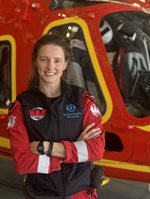
Dr Simoné Visagie’s advice for future OSCE candidates is to surround yourself with positive, like-minded people. “Find a study group to broaden your knowledge and keep up your motivation.”
The Buchanan Prize winner describes the exam process as a journey, requiring personal commitment and dedication.
“It was challenging to maintain full-time work and study among other life commitments. But overall, I learned so much and made great friendships.”
Her study group did regular practice sessions which focused on learning the exam’s techniques.
“We talked through concepts and quizzed our medical knowledge. I also got feedback on my performance, and it helped me to identify weaknesses.”
In the lead-up to the exam, the group organised practice days emulating the exam’s timing and structure.
While study is integral, she recommends taking breaks “and keeping one non-medical activity alive – preferably that’s good for your health too!”
Her best friend and colleague, Dr Adrienne Davey, convinced her to train in emergency medicine and has been her biggest support. “She has never stopped listening, motivating and sharing her knowledge.”
Dr Visagie traces her interest in emergency medicine back to growing up in South Africa and then moving to rural Australia where she saw the challenges of limited medical care in rural areas and the skillset of emergency doctors.
Based in Auckland, she said she values the flexibility of training between Australia and Aotearoa New Zealand.
“Emergency training teaches diverse clinical, communication, and leadership skills which will continue to open doors to new experiences and different work environments.”
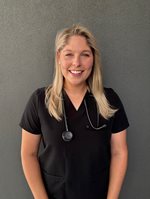 Dr Morgan Sykes
"Empowering" is how Dr Morgan Sykes, awarded the Buchanan Prize, describes the exam process.
“It was incredibly challenging, but when you study for the Fellowship you really develop your knowledge, clinical acumen and confidence. You then apply that to your everyday work, shaping you into a better clinician.”
Dr Sykes said she is immensely grateful to the DEMTs and clinicians who supported her, generously giving up hours of their time for practice sessions and guidance.
“These are hardworking clinicians with full-time jobs and families, who were coming in early or staying late to help.“
Originally from the UK, Dr Sykes moved to Australia with her partner, also an ED trainee.
She feels fortunate to have trained in Queensland hospitals, which “invested in me as a trainee and as a person. Their commitment to trainee education made an enormous difference.”
Her top tip is to embrace discomfort. “The more uncomfortable you make yourself during preparation, the less uncomfortable you’ll be on the day. Do stations back-to-back, focus on areas of weakness, practice in front of consultants – even the ones who intimidate you – and use your daily work on the floor as a free OSCE.”
She also suggests finding a small study group to challenge and support you and celebrate your wins.
After graduating from medical school, Dr Sykes felt uncertain about which specialty to pursue until she did her first ED rotation in the UK.
“I loved the buzz. Even though I was very junior and working with highly skilled senior clinicians, they made me feel part of their team. When I moved to Australia and worked on the Sunshine Coast, I experienced that same sense of belonging.”
The best part of emergency medicine? “Being able to make a meaningful difference to someone’s day.”